
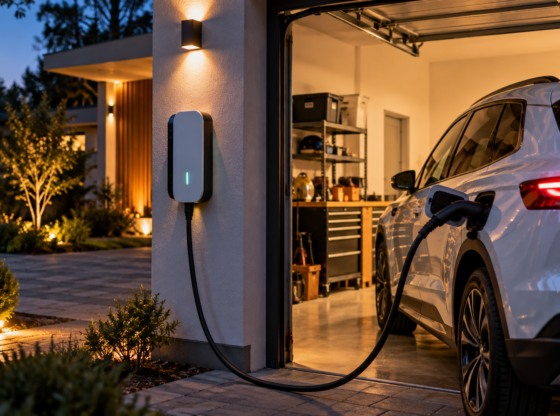

The most important charging station for an electric vehicle may not be on a highway.
It may be in a garage, beside a house or in a residential parking space.
Public fast chargers receive most of the attention because they are visible and because their charging speeds continue to rise. Yet everyday electric vehicle use depends heavily on something much less dramatic: the ability to charge conveniently at home.
For many EV owners, home charging means plugging the vehicle in after returning from work and leaving it connected overnight. By morning, the battery is ready for another day. There is no special journey to a charging station and no need to wait while the battery fills.
That simple routine is becoming an important part of the wider energy system.
As electric vehicle ownership grows, homes are gaining new electrical loads. At the same time, smarter chargers are learning how to respond to electricity prices, household consumption and renewable generation.
The home charger is therefore becoming more than a device that transfers electricity to a car. It is becoming a connection between transportation and the home energy system.
Home Charging Remains the Foundation
Public charging is essential for long-distance travel and for drivers who cannot charge where they live. But when a suitable home connection is available, overnight charging offers a major practical advantage.
The International Energy Agency estimates that more than 43 million private light-duty charging points existed globally at the end of 2025. The number of private chargers is already many times larger than the public charging network. (iea.org)
That difference is easy to understand.
A private charger does not need to serve hundreds of vehicles every day. It only needs to charge one vehicle, often during the hours when that vehicle is parked.
This changes the economics of charging.
A driver can connect the car at home and allow the battery to charge gradually rather than searching for the fastest possible charging session. The vehicle can use several hours to replace the energy consumed during the day.
For everyday driving, that can be enough.
The Wallbox Is Becoming Part of the Home
A basic household electrical socket can charge an electric vehicle, but dedicated equipment offers a much more capable solution.
Home wallboxes can provide higher charging power and include safety systems designed specifically for EV charging. They can also communicate with the vehicle and manage when charging starts or stops.
The result is a more controlled charging process.
Instead of simply drawing electricity whenever the vehicle is connected, a smart wallbox can respond to instructions from the homeowner or an energy-management system.
That becomes important as more households add electric vehicles.
The electricity demand created by one car may be manageable. Millions of homes charging vehicles at the same time create a much larger challenge.
The question is therefore not simply how much electricity an individual vehicle needs. It is when that electricity is taken from the grid.
Timing Can Matter More Than Charging Speed
An electric vehicle does not normally need to charge as quickly as possible at home.
If a car arrives at 7 p.m. and does not leave until 7 a.m., there may be many hours available for charging.
A smart system can use that flexibility.
Instead of charging immediately at maximum power, it can wait for a period when electricity demand is lower. It can then charge gradually during the night.
This approach can reduce pressure on the local electricity network.
The IEA identifies smart charging as an increasingly important tool for managing the additional electricity demand created by EVs. By shifting charging away from periods of peak demand, smart systems can help reduce the need for expensive grid upgrades. (iea.org)
For the driver, the change can be almost invisible.
The car is simply ready in the morning.
Behind that simple result, however, software has decided when electricity should flow.
Electricity Prices Are Becoming Part of the Charging Experience
Time-of-use electricity tariffs make this approach even more useful.
In markets where electricity prices vary during the day, households can potentially reduce charging costs by charging when electricity is cheaper.
The charger can use a schedule instead of requiring the owner to make the decision manually.
For example, a vehicle could begin charging later in the evening and continue through the night. If the battery does not need to be full immediately, the system has more freedom to choose the most appropriate charging period.
This creates a different relationship between the driver and the car.
The owner no longer has to think about every charging session. The system can manage the process according to a target, such as having the battery ready by a particular departure time.
The result is similar to other smart-home technologies. The user sets the outcome, while software manages the details.
Electric Cars Are Becoming Part of the Home Energy System
The biggest change may come when EV charging is combined with other household technologies.
Solar panels are an obvious example.
A home with solar generation can use electricity produced during the day to charge an electric vehicle. Instead of sending all excess solar electricity to the grid, some of it can be stored in the vehicle’s battery.
This creates a simple form of energy coordination.
Solar panels produce electricity. The home uses what it needs. The vehicle can absorb some of the remaining generation.
Smart charging makes this process more practical because the system can adjust charging according to solar production.
If the vehicle is parked at home during the day, the charger could increase charging when solar output is high. If the vehicle needs to leave soon, it can prioritise the required energy.
The charging system becomes a bridge between the home’s electricity production and its transportation needs.
Home Batteries Add Another Layer
Some households are also installing stationary battery storage.
These batteries can store electricity and release it later. When combined with solar panels and an EV charger, they create a much more flexible energy system.
The home can produce electricity, store it and decide when to use it.
An electric vehicle adds another large battery to the system.
This does not mean that every home will need all of these technologies. The economics depend on local electricity prices, solar generation, battery costs and household consumption.
But the technical relationship is becoming increasingly important.
The home is no longer simply a place where an electric car happens to charge. It can become a small energy-management system in which several technologies work together.
The Next Step Is Bidirectional Charging
The most interesting development is the ability to move electricity in both directions.
Traditional charging sends electricity from the grid to the vehicle. Bidirectional charging allows the vehicle to send electricity back.
There are several possible applications.
A car could provide emergency power to a house during an outage. It could help reduce electricity consumption from the grid during expensive periods. In larger systems, a fleet of vehicles could potentially provide energy or other services to the electricity network.
The technology is already being developed, but it is not yet universal.
The IEA notes that vehicle-to-grid offers for private EV owners began appearing in some markets in 2025, although adoption remains limited and regulatory and technical requirements vary. (iea.org)
This means bidirectional charging is still an emerging feature rather than a standard part of every home charger.
Its importance could increase as more vehicles support it.
The Car Could Become a Backup Power Source
The backup-power application is one of the easiest benefits for homeowners to understand.
A typical electric vehicle battery can store considerably more energy than a small household battery.
If the vehicle can safely supply electricity to a home, it could keep essential appliances operating during a power outage.
That changes how people might think about an electric car.
It is no longer only transportation.
It can also become a temporary energy-storage system.
The idea is particularly interesting because most cars spend much of their time parked. If the vehicle is at home when electricity is needed, its battery is already there.
The challenge is creating the right hardware and software.
The vehicle, charger and home electrical system all need to communicate correctly. Safety systems must also prevent electricity from flowing into the wider grid when the grid is down unless the system is specifically designed to do so.
As standards develop, these capabilities could become easier to install and use.
More EVs Will Put Pressure on Residential Networks
The convenience of home charging does not mean there are no infrastructure challenges.
Residential electricity networks were not designed for millions of households suddenly adding large rechargeable batteries to their daily consumption.
A single home may manage the additional load without difficulty. Problems become more complicated when many homes in the same neighbourhood begin charging simultaneously.
This is where smart charging becomes especially valuable.
Utilities do not necessarily need every vehicle to stop charging. They may simply need to prevent all vehicles from charging at their maximum rate at the same time.
Software can distribute the demand across several hours.
That can make existing electrical infrastructure more useful without immediately requiring major physical upgrades.
The IEA expects EV electricity demand to continue growing rapidly, but it also notes that smart charging and managed charging can help integrate this new demand into electricity systems. (iea.org)
The charger is therefore becoming part of grid management.
Apartment Buildings Face a Different Challenge
Home charging is easiest when a driver has a private garage or parking space.
Apartment buildings are more complicated.
Several residents may want to charge at the same time, while the building may have limited electrical capacity. Parking spaces may also be shared, which makes ownership and billing more complicated.
This creates a different market for charging technology.
A building may need a central charging system that distributes available power between several vehicles. Instead of giving every car maximum power simultaneously, the system can allocate electricity according to demand.
One vehicle may receive more power because it needs to leave soon. Another may charge more slowly because it will remain parked overnight.
This type of load management can make a limited electrical connection serve more vehicles.
It also creates a need for accurate billing, user authentication and simple access systems.
For large residential developments, those software functions can be almost as important as the charging hardware itself.
Charging Is Becoming More Automated
The next generation of home charging is likely to involve less interaction from the driver.
A mature system should know when the vehicle is connected, when it needs to be ready and how much energy is required. It can then decide when charging should happen.
The homeowner does not need to monitor the process constantly.
This is particularly useful for people with predictable daily schedules. A driver can simply arrive home, park and leave the vehicle connected.
The software handles the rest.
That convenience may become one of the strongest arguments for smart charging.
Fast charging attracts attention because it reduces waiting time. Smart home charging solves a different problem: it reduces the number of decisions the driver has to make.
The difference may seem small, but it becomes significant when charging happens every day for years.
The Home Charger Is Becoming an Energy Gateway
This is why the home charging market deserves more attention.
The wallbox is no longer simply an accessory for an electric vehicle. It can become a gateway between the car, the house and the electricity network.
It can control when the vehicle charges. It can respond to electricity prices. It can coordinate with solar generation. It can work with stationary batteries. In some systems, it can even allow electricity to move back from the vehicle into the home.
That makes the charger part of a larger energy ecosystem.
The technology also creates a new role for software companies, utilities and energy providers. They can offer charging plans, automated schedules and energy-management services rather than simply selling electricity.
This could eventually make charging feel less like a separate activity and more like another automated household service.
The Future of Charging May Start at Home
Public fast charging will remain essential.
Drivers will still need powerful charging stations for long journeys. Commercial vehicles will require specialised infrastructure. High-power corridors will continue to expand.
But those systems are only one part of the charging network.
For everyday driving, the most important charger may remain the one that is waiting at home.
The reason is simple. A vehicle spends most of its time parked.
That creates a huge amount of flexibility.
If charging can happen gradually while the vehicle is not being used, there is less need to maximise charging speed. Instead, the system can focus on efficiency, cost and coordination with the wider electricity network.
This is where the next stage of EV charging is likely to develop.
The future home charger will not simply ask how quickly a car can be filled with electricity. It will understand when the car needs energy, where that energy should come from and how much electricity the home and grid can provide at that moment.
The electric vehicle will become part of the home’s energy system rather than remaining separate from it.
And once charging becomes that integrated, plugging in a car may eventually feel less like a task and more like something that simply happens in the background.