
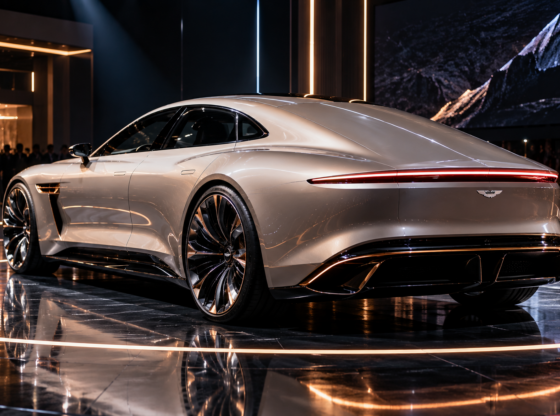

The electric-car calendar is becoming increasingly crowded, and autumn 2026 is offering a particularly revealing snapshot of where the industry is heading. New battery-powered models are arriving across almost every part of the market, from compact hatchbacks designed to make electric driving more affordable to high-performance luxury cars that use enormous power outputs and advanced electrical architectures to redefine what an EV can be.
For buyers, the most interesting part is no longer simply the number of new electric cars being announced. The important question is what manufacturers are actually putting into production, how much these vehicles will cost, how far they can travel between charges and when customers can realistically expect to receive them.
The latest launches provide some striking answers. Jaguar has just revealed the production Type 01, a dramatic electric grand tourer with more than 1,000 horsepower and a claimed range of around 400 miles. At the other end of the market, Volkswagen’s ID. Polo is bringing electric propulsion into the compact-car segment, while the new Audi A2 e-tron is entering the European market with a much smaller battery and a more conventional urban-car mission.
Together, these cars show how broad the next generation of electric vehicles is becoming.
Jaguar Type 01 Turns a Concept Into a Production Car
One of the biggest EV announcements of the week comes from Jaguar, which has officially unveiled the Type 01, the production successor to its controversial Type 00 concept.
The new car remains remarkably faithful to the dramatic shape shown in the prototype. It is a large, low-slung four-door electric grand tourer with 23-inch wheels, a highly distinctive rear design and an unusual approach to visibility that replaces the conventional rear window with a camera-based system.
Underneath the styling is equally ambitious technology. The Type 01 uses three electric motors producing around 1,016 horsepower and 1,365 Nm of torque, allowing it to accelerate from zero to 62 mph in approximately 3.2 seconds. Its battery is rated at around 118 kWh, while Jaguar is targeting an EPA range of about 400 miles. The company says ultra-fast charging can add approximately 200 miles of range in 13 minutes.
This is not intended to be an affordable mass-market EV. Pricing is expected to begin in the region of $130,500 for one version, with other reports placing the launch price around £130,000 in the UK. Orders are expected to open in early 2027, with deliveries following later that year.
The Type 01 therefore represents something larger than another luxury electric car. Jaguar is using it to redefine the brand around electric performance, design and exclusivity, making the model one of the most consequential launches in the company’s modern history.
Audi Brings Back the A2 Name for the Electric Era
While Jaguar is moving toward the extreme end of the EV market, Audi is taking a very different approach.
The new A2 e-tron has entered the European market in September 2026, according to the European Alternative Fuels Observatory. One listed configuration uses a 50 kWh battery, produces 125 kW and offers a range of approximately 325 km. Its indicative price is around €38,600.
Those figures may appear modest beside the Type 01, but that is precisely the point. A compact electric car does not necessarily need a 100-kWh battery or several hundred horsepower. Its role is to provide efficient transportation without carrying the additional weight and cost associated with a much larger vehicle.
The A2 e-tron therefore represents another important direction for the industry: electric cars are becoming increasingly specialized according to their intended use. The best EV for a city driver does not have to be the best EV for someone regularly crossing a continent.
Audi’s return to a compact format also demonstrates how manufacturers are reconsidering vehicle size. Instead of assuming that every new electric model needs to be larger than the previous generation, automakers are beginning to experiment with smaller footprints and more efficient battery packs.
Leapmotor B05 Targets the Mainstream
The race for affordable electric cars is also attracting manufacturers that have built their reputations around offering substantial equipment for relatively competitive prices.
Leapmotor’s B05 hatchback is a good example. The European-market model has been announced at £28,995 in the UK, with order books opening in early July 2026 and first deliveries scheduled from late July.
The B05 uses a 67.1 kWh battery and offers up to 300 miles of WLTP range. Its electric motor produces 218 PS, while the company quotes a zero-to-62-mph time of 6.7 seconds. DC charging from 30 to 80 percent takes approximately 17 minutes under the manufacturer’s stated conditions.
Those specifications are important because they show how quickly technology once associated with expensive EVs is moving into lower price brackets.
The B05 is not being presented as a stripped-down economy car. It includes a modern software platform, smartphone-style interface, Apple CarPlay and Android Auto, while its battery uses a cell-to-chassis approach designed to improve packaging and structural rigidity.
This combination of price, range, performance and equipment illustrates the pressure facing established automakers. Consumers are becoming less willing to accept a large technology premium simply because a vehicle is electric.
DS N°7 Pushes Electric Range Further
At the other end of the mainstream premium segment is the DS N°7, a new compact SUV that demonstrates how manufacturers are using larger battery packs and aerodynamic design to extend driving range.
The fully electric E-TENSE version starts at €46,990, while the long-range configuration can achieve up to 740 km under the WLTP cycle. DS has positioned the model as a premium vehicle focused on comfort, refinement and long-distance travel rather than outright performance.
The 740-km figure is particularly notable because it changes the role of range in an electric SUV. Instead of treating long journeys as a compromise requiring frequent charging stops, manufacturers are increasingly trying to make an EV capable of covering the distance associated with conventional long-range vehicles.
The DS N°7 also illustrates another important development in 2026: electric vehicles are no longer being designed around a single technical formula. Some manufacturers are concentrating on low weight and affordability, while others are investing in large batteries and aerodynamic efficiency to maximize range.
The customer can therefore choose between fundamentally different approaches rather than simply comparing one electric car with another on battery size.
The New Opel Astra Shows How Familiar Models Are Evolving
Not every important EV launch comes with a completely new name.
The latest Opel Astra Electric demonstrates how manufacturers are gradually integrating electric versions into established model families. The updated Astra Electric offers up to 454 km of WLTP range and is available to order in Germany from €37,990.
That strategy may become increasingly important as electric cars move deeper into the mainstream. Buyers who already understand a particular vehicle family do not necessarily want to learn an entirely new product category just because they are switching powertrains.
The Astra also highlights the continuing importance of choice. Opel offers the model alongside hybrid and combustion-engine versions, allowing the same basic vehicle concept to serve customers with different requirements.
This mixed approach remains common in 2026, even as manufacturers invest heavily in dedicated electric platforms.
New EVs Are No Longer Competing on Range Alone
Looking at these launches together reveals a more complicated picture than the traditional electric-car race for maximum range.
The Jaguar Type 01 is about extreme performance, design and exclusivity. The Audi A2 e-tron focuses on compact dimensions and everyday efficiency. The Leapmotor B05 combines a relatively accessible price with a substantial battery and quick charging, while the DS N°7 uses a large battery and aerodynamic engineering to deliver exceptional official range. The Astra Electric takes yet another route by adding electric propulsion to an established compact-car family.
This diversity is one of the most significant changes in the EV market.
A few years ago, new electric cars were often judged primarily by whether they could match the range and acceleration of the leading models. Now manufacturers are competing across a much wider set of criteria: purchase price, battery chemistry, vehicle weight, charging performance, software, interior space, design, efficiency and even brand identity.
That makes the arrival of each new model more interesting because its specifications tell a story about the strategy behind it.
Battery Size Is Becoming a Strategic Decision
The numbers also reveal an important change in how manufacturers think about batteries.
A larger battery provides greater range, but it also adds weight and cost. A smaller battery can make a vehicle cheaper and more efficient, provided its range is sufficient for the intended customer.
The contrast between the Audi A2 e-tron’s 50 kWh battery and Jaguar’s roughly 118 kWh pack could hardly be greater. Yet neither is necessarily the more advanced solution. Each has been designed around a completely different vehicle concept.
That distinction is becoming increasingly important as the EV market expands. Instead of trying to give every customer the largest possible battery, manufacturers can increasingly tailor battery capacity to the vehicle’s purpose.
It is also one reason why future electric-car lineups are likely to become more varied rather than converging around one standard specification.
What Buyers Can Expect From the Next Wave
The 2026 launch calendar suggests that electric cars are entering a period in which technical specifications will become more meaningful because there are finally enough models to make genuine comparisons.
A buyer interested in a compact commuter EV can look toward cars such as the A2 e-tron or ID. Polo. Someone searching for a long-range family vehicle can consider models such as the DS N°7. Drivers looking for performance have an expanding selection that now stretches from sporty mainstream models to extraordinary machines such as the Jaguar Type 01.
Prices are becoming equally diverse. Some new EVs are moving below or around the €30,000–£30,000-equivalent territory, while luxury manufacturers are pushing well beyond six figures. The European market alone now contains dozens of new or substantially redesigned electric vehicles spanning a remarkably wide range of prices and vehicle types.
That is perhaps the clearest sign that the electric car is becoming a normal part of the automotive industry rather than a specialist product.
The next stage of the EV story will therefore be told not by one breakthrough model, but by a steady stream of new cars arriving with different ideas about what electric mobility should be. In 2026, that process is already visible in showrooms and order books, where battery size, driving range, price and performance are no longer isolated technical figures but part of a much broader competition to define the electric car of the next decade.